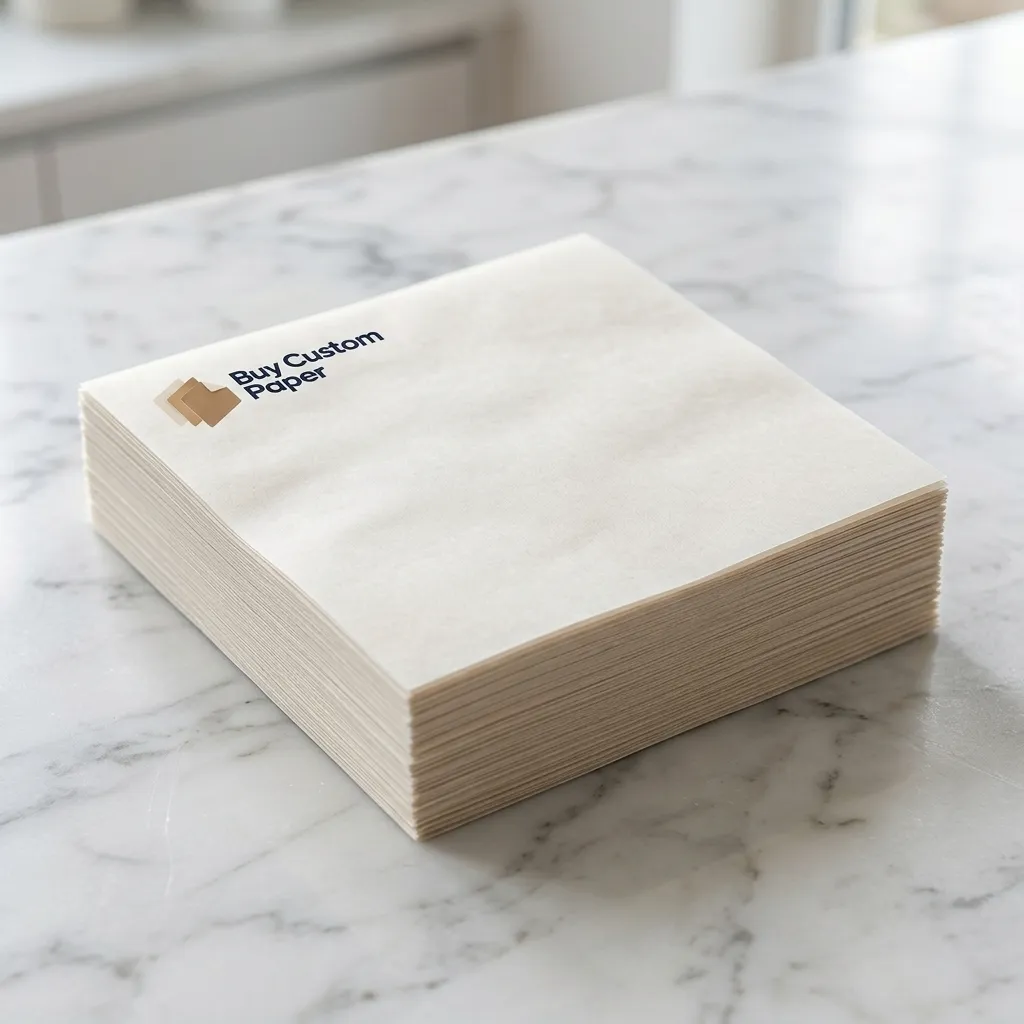
What are Custom Patty Paper?
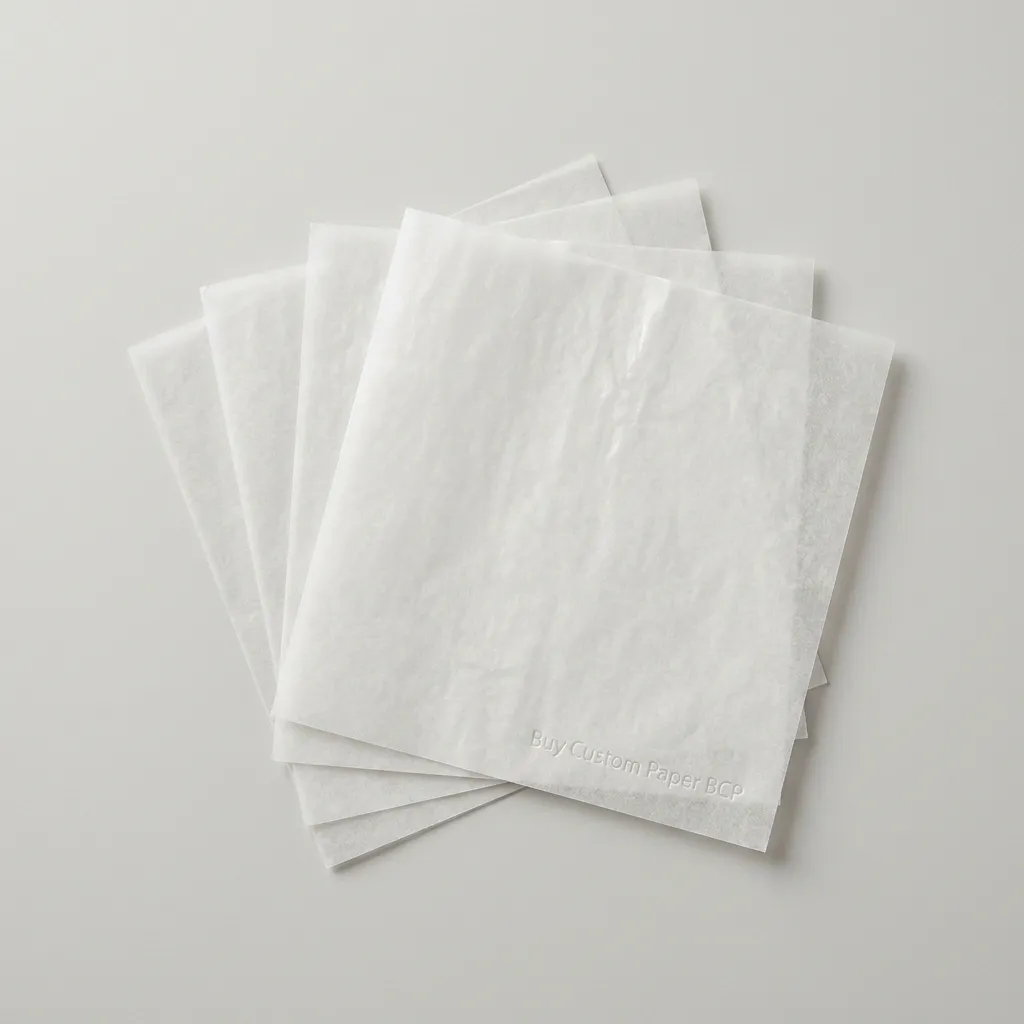
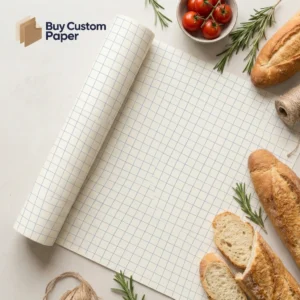
Custom patty paper is a converted food paper placed between patties so they can be separated for stacking, storage and handling. At Buy Custom Paper (BCP), we work from your specification: sheet size, paper weight, material construction and printing are set around your product and process. Share your application and quantity, and we’ll quote around your requirements.
Custom Patty Paper for Food Interleaving
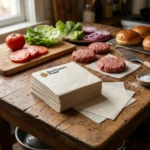
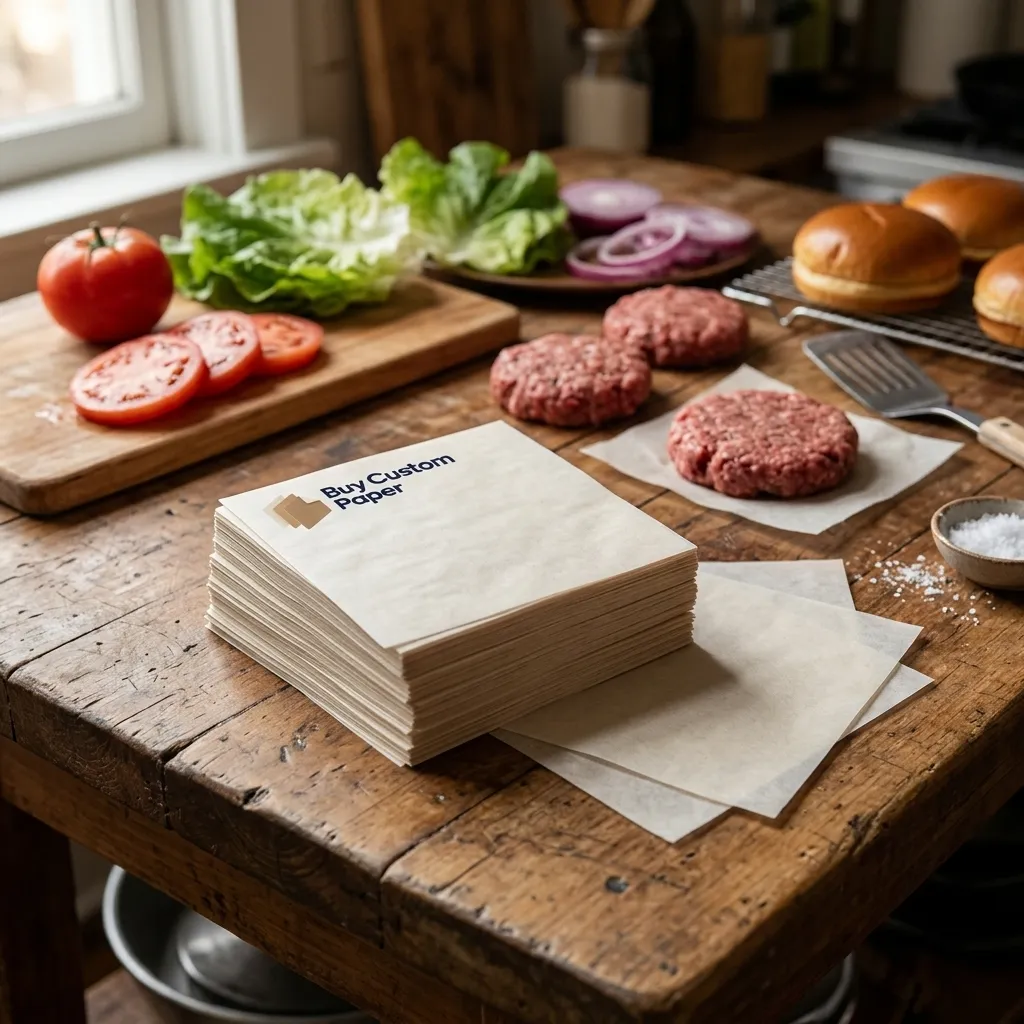
Patty paper is an interleaving paper. A sheet goes between freshly formed patties, or other compatible food items, so each can be lifted apart when needed. Buyers also call it hamburger patty paper or patty paper sheets. It is used during preparation, stacking and storage, and in some operations during freezing.
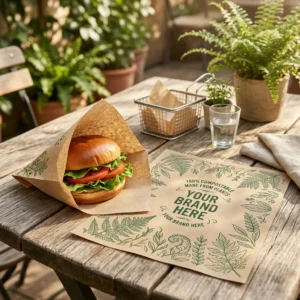
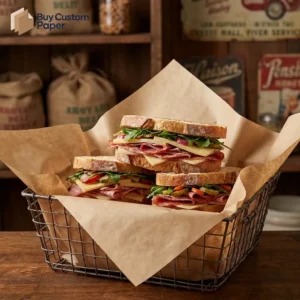
It is a different product from custom burger paper, which wraps a cooked burger for serving. It also shouldn’t be assumed to match general wax paper, butcher paper, freezer paper or parchment. The right sheet depends on the food, the patty size and the conditions of use, so no single construction suits every application.
How Patty Paper Differs from Related Papers
These papers can look alike but do different jobs. Check you are specifying the right one.
| Paper | Typical job | Key distinction |
|---|---|---|
| Patty paper | Separating patties during preparation, stacking and storage, and freezing where the construction suits it | Sized to fit a patty or press; construction chosen for release and handling |
| Burger paper | Wrapping or lining a cooked burger for service | Front-of-house paper, chosen for the burger’s grease and moisture exposure and for printed presentation |
| Wax paper | Cold or ambient wrapping, lining and separating | A wax-treated paper. Some patty papers are waxed, but wax paper as a category isn’t automatically suited to patty separation |
| Parchment paper | Release-oriented uses such as baking | A different construction; heat suitability must be confirmed for the exact product |
Patty Paper Specifications and Customization
We supply custom patty paper in standard and custom sizes, paper weights, wax and material types, sheet and roll formats, printing and cutting. The checklist below shows our standard range for each specification, so you can start from a familiar size or weight, and we’ll confirm the exact combination for your product.
Custom patty paper specification checklist
| Specification | What to specify, and why it matters | What we offer |
|---|---|---|
| Dimensions (square sheets) | Finished length and width in inches. The sheet must suit the patty, press or workflow. | Standard sizes 4¾ × 5, 5½ × 5½ and 6 × 6 in, plus custom dimensions cut to your patty, press or workflow |
| Shape and diameter | Square, round or another shape; diameter if round. Round suits round patties and presses. | Square sheets, or die-cut round sheets in 4–6 in diameters (4, 4.5, 5 and 6 in); other shapes on request |
| Format | Cut sheets, or roll stock for paper-fed machines. Format affects handling and equipment feed. | Cut sheets for patty separation, and roll stock for paper-fed forming machines |
| Roll dimensions (rolls only) | Width, length or diameter, and core, matched to your equipment. | Widths of 12–18 in (12, 15 and 18 in), lengths of about 200–1,200 ft and cores of 1–3 in; processing rolls slit to your machine’s width and diameter |
| Paper weight | GSM or pound (#) basis weight, for the base paper or the finished waxed sheet. Weight is not a performance guarantee. | About 25–45 lb basis weight (roughly 41–73 GSM), specified in GSM or pounds; other weights on request |
| Thickness (caliper) | Only if thickness is a separate requirement, in mils or microns. Papers of the same weight can differ in thickness. | Specified in mils or microns where thickness matters; about 2.5–3.0 mil (63–76 microns) at 40–45 lb |
| Material construction | Base paper, wax or other treatment, single-layer or laminated. This influences release, handling and food-contact review. | Dry wax, semi-wax or wet wax, on one or both sides; single-layer, or laminated on request; machine-glazed or machine-finished base |
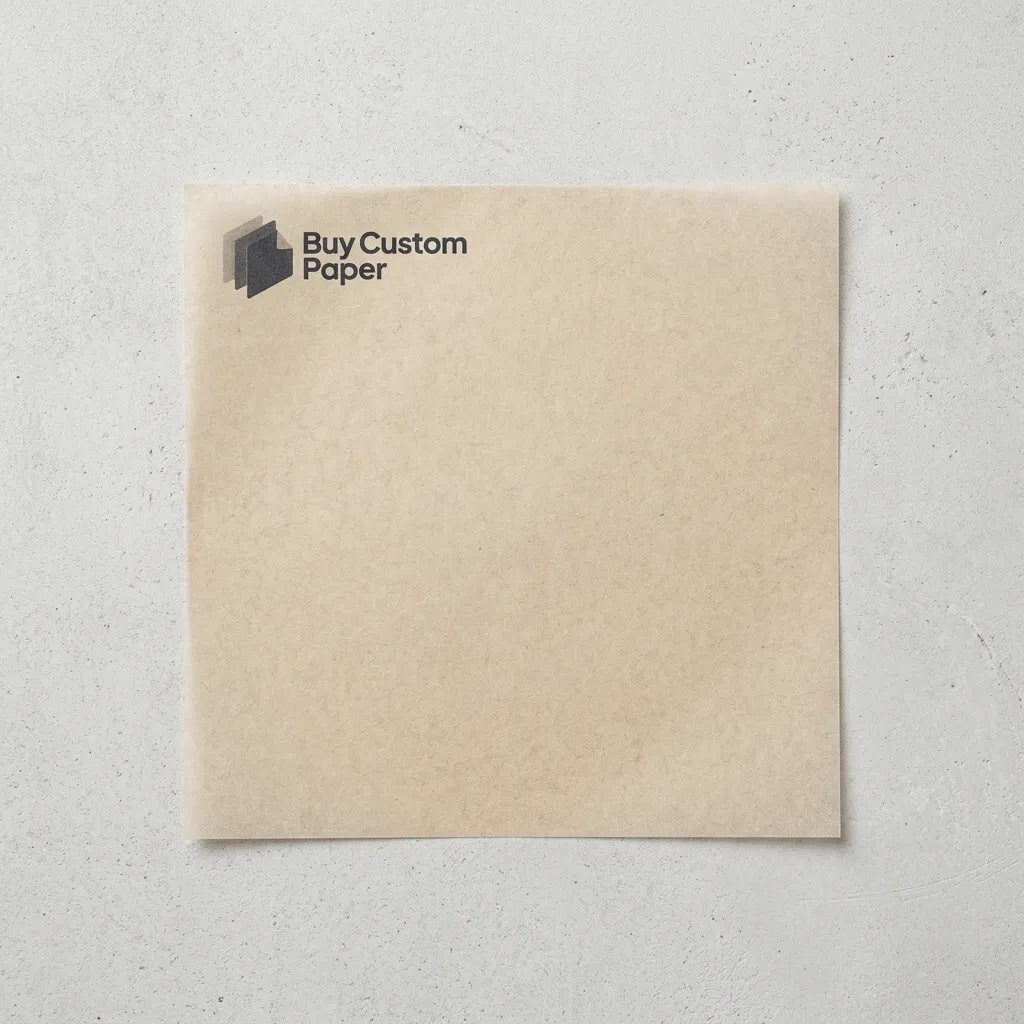
| Base color | White or natural kraft appearance. Base color changes how printed colors look. | White or natural kraft |
| Printing and artwork | Plain or printed; logo or repeat pattern; which side faces the food. Print must suit the material and the food-contact surface. | Plain, or printed in 1–4 colors with food-grade inks; vector artwork preferred, raster at 300 DPI minimum; digital proof before production |
| Cutting and converting | Finished size and shape; slitting and rewinding for rolls. | Sheet cutting, die cutting, slitting and rewinding |
| Intended conditions | Food type; fresh, chilled or frozen; manual or machine use. Suitability depends on use. | Reviewed against your application |
Tell us whether your weight is for the base paper or the finished waxed sheet, in GSM or pounds, and we’ll match it to your specification.
Sheet Sizes and Shapes
Sheet size is set by the patty, the press or the workflow. Specify the finished length and width in inches, or the diameter for a round sheet. A sheet slightly larger than the patty is generally easier to peel, and the right allowance depends on your patty size, press and process. Square is the common shape, and we also cut round and other die-cut shapes. We cut custom dimensions to your specification and confirm tolerances when we review it.
Patty paper sizes we offer
| Size | Often chosen for |
|---|---|
| 4¾ × 5 in | Smaller or slider-style patties |
| 5½ × 5½ in | Standard burger-press patties |
| 6 × 6 in | Larger patties |
| Round, 4–6 in diameter (4, 4.5, 5 and 6 in) | Round patties and round presses |
| Custom | Other shapes and sizes cut to your patty or press |
Need a different size or shape? We cut custom dimensions to your patty or press.
Paper Weight and Thickness
GSM measures paper weight in grams per square meter. Thickness (caliper) is measured separately, usually in mils (1 mil = 0.001 in = 25.4 microns), and two papers with the same GSM can differ in thickness. Neither figure on its own guarantees strength, stiffness, release or grease resistance, because performance depends on the full construction.
We supply waxed patty paper at about 25–45 lb basis weight, roughly 41–73 GSM, and we can specify weight in GSM or in pounds (#), so give whichever your team uses. Other weights are available on request.
Weight conversion reference (24 × 36 in, 500-sheet basis)
| Basis weight (lb) | Approx. GSM |
|---|---|
| 25 | 41 |
| 30 | 49 |
| 35 | 57 |
| 40 | 65 |
| 45 | 73 |
The conversion is about 1.63 GSM per lb on this basis, and the basis size varies by paper grade. If you are unsure of the right weight, send us your current specification or a sample of the paper you use now, and we’ll match it.
Patty Paper Materials, Wax, and Coatings
The base paper, any wax or other treatment, and any lamination are separate parts of the construction, and each affects how the sheet behaves. We offer dry wax, semi-wax and wet wax, applied to one or both sides, and laminated constructions on request. “Waxed” on its own doesn’t tell you how a sheet will release, resist moisture or fat, or perform in food contact. Which construction suits your patty paper depends on the food, contact conditions, storage and printing. Describe those, and we’ll match the construction to them.
Printed Patty Paper, Sheets, Rolls, and Converting
- Cut Sheets: The usual format for separating patties, supplied at your specified finished size.
- Roll Format: Rolls suit processes that feed paper from a roll. We supply widths of 12–18 in, lengths of about 200–1,200 ft and cores of 1–3 in, and we slit processing rolls to your machine’s width and diameter. See our custom wax paper rolls.
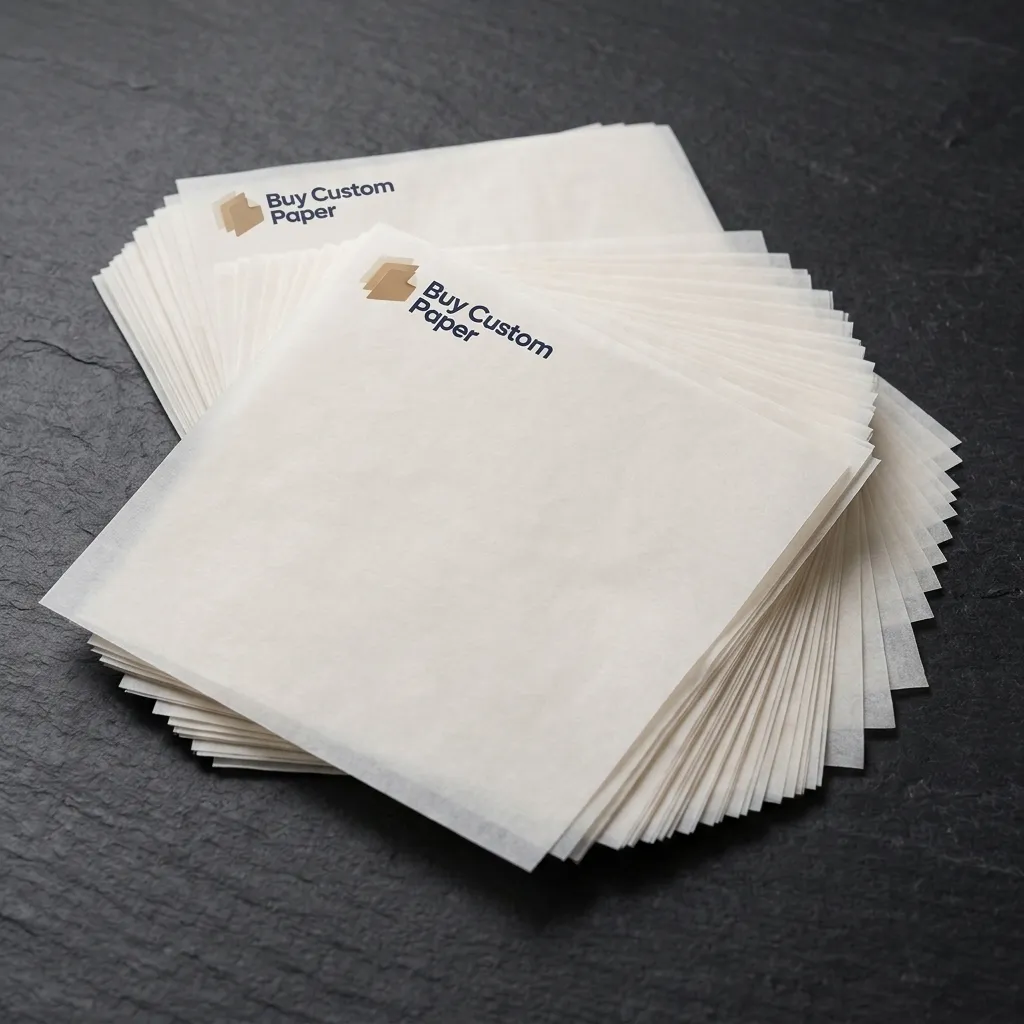
- Printed Patty Paper: We print logos and repeating patterns in 1–4 colors with food-grade inks, with placement set for the surface that touches food.
- Artwork and Proofs: Vector files (AI, EPS or PDF) are preferred, raster artwork should be at 300 DPI minimum, and you approve a digital proof before production begins.
- Cutting and Converting: Sheet cutting and die cutting set the finished size and shape. Slitting and rewinding set roll width and configuration.
We confirm the exact combination of material, print, size and converting for your product when we review your specification.
Patty Paper Applications
Each application changes which specification choices matter most.
Fresh Meat Patties
Fresh meat patties are the core use. A sheet between each patty lets stacks be held and separated during preparation and handling, and patties can be formed on the sheet in a burger press so each one is ready to stack. Sheet fit, material construction and contact conditions are the main choices. Release and grease behavior depend on the actual construction, so review them against your product rather than assuming them. Share your patty size and process in your quote request.
Frozen Patties
Separating patties after freezing is a distinct requirement. Laminated constructions are one option for it, but suitability depends on the construction, the product and the storage conditions, not on the product name. Describe your freezing and storage process in your quote request, and we’ll recommend a construction. Where release after freezing is critical, ask us about sample options before ordering in volume.
Plant-Based Patties and Other Food Applications
Patty paper and similar interleaving sheets are also used for plant-based patties and, in some workflows, poultry patties and other compatible items. Surface, moisture and fat content differ between foods, so each food and contact condition needs its own suitability check. Specify for your main product first, and mention any secondary uses in your quote request.
How to Choose the Right Patty Paper
You don’t need every technical detail to start. Work through these points and share what you know:
- Application: What you separate, at which stage, and whether it is fresh, chilled or frozen.
- Format: Sheet shape and finished dimensions, or roll details if relevant.
- Material: Known GSM or pound weight, wax or construction, or your current paper as a reference.
- Performance: What matters most, such as clean separation, easy handling or equipment feed.
- Printing: Plain or printed, with artwork if you have it.
- Equipment: Manual use, or press and machine details.
Where equipment compatibility or release after freezing is critical, ask us to review the specification with you before you order. Discuss your patty paper requirements.
Food-Contact Requirements and Documentation
Patty paper may touch food directly, so the finished construction matters, not just the base paper. In the US, food-contact suitability depends on the intended use and on every component of the construction, including waxes, coatings, treatments and inks.
We supply FDA-related, food-grade, food-contact paper. This describes the paper’s intended use, not an FDA endorsement or a blanket approval for every construction, food or condition. If your team needs documentation, ask for the documents that apply to your selected construction, and tell us your food type, contact conditions and whether printing is involved.
Ordering Custom Patty Paper from BCP
As a custom patty paper supplier, we work from your specification. Our minimum order quantity for paper products is 500, and our delivery timeframe is 8–13 days. We offer competitive pricing, and quotes are based on your specification and quantity.
- Share Your Requirements: Send your application, sizes, quantity and any artwork.
- Confirm the Specification: Weight, construction, shape and print are agreed.
- Approve a Proof: A digital proof is reviewed before production begins.
- Production and Shipping: The order is made to the approved specification and shipped to your destination.
Include as much of the following as you can:
- Application and Food: What the paper separates, and the contact and storage conditions.
- Size and Shape: Finished dimensions in inches, or diameter, plus any shape requirement.
- Weight and Material: Known GSM or pound weight, wax or construction, or a current specification.
- Format and Printing: Sheets or rolls, plain or printed, and artwork if available.
- Quantity and Unit: How many you need, and the unit you count in, so the 500 minimum can be applied to your format.
- Destination and Date: Where it ships and when you need it.
- Documentation Needs: Any food-contact paperwork your team requires.