






Food Paper Materials and Coatings
Start with what the paper will touch. Fat, oil, water, steam and contact time each place different demands on a wrap or liner, so choose the construction first and the weight second. We provide food-grade, food-contact paper for wrapping and lining, but suitability for your food depends on the grade, coating, ink and conditions of use. White and natural brown stock describe appearance only, not a barrier or an environmental credential.
Material and coating options
| Construction | Where it fits | What to keep in mind |
|---|---|---|
| Suitable uncoated stock | Foods that release little fat or moisture | Carries no grease or moisture rating |
| Natural greaseproof paper | Fatty or oily foods | Resists oil through dense paper structure; this is not water resistance |
| Grease-resistant paper | Foods that release fat | Depends on the grade; grades are not interchangeable |
| Dry-wax or wax-coated paper | Grease and moisture handling; one or both sides treated | Not for oven use; decide the food-facing and printed sides |
| PE or polymer-coated paper | Wraps facing more moisture | Not liquid-tight by itself; coated side, coating weight and closure matter |
Greaseproof and Grease-Resistant Paper
Natural greaseproof paper gets its oil resistance from refined, densified fibers rather than an added coating, while grease-resistant grades can gain performance from an added treatment. Either route addresses fat and oil, but neither automatically addresses water or steam, so a hot, wet filling can call for a different construction than a fatty one. Because grades differ, tell us the food, its serving temperature and how long it stays wrapped, and we will help you match a grade.
Wax-Treated and Polymer-Coated Paper
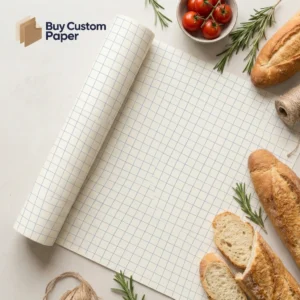
Wax-treated paper carries a wax coating on one or both sides, selected to suit how the food and your print layout meet the sheet. Polymer-coated paper, with a polyethylene (PE) layer, is a separate construction for wraps that face more moisture. The two are not interchangeable; they differ in grease and moisture handling and in how they interact with print and food contact. Neither coating alone establishes food-contact or heat suitability, because that depends on the full construction. For continuous wax-treated dispensing, see our custom wax paper rolls.
Paper Weight and GSM Options
GSM is grams per square meter. It measures paper mass, not thickness and not barrier performance. Two papers at the same GSM can feel and perform differently because fiber, density, coating and converting differ. Once the construction is chosen, use weight to compare compatible grades for feel, folding and handling.
Nominal paper weight options
| Grade or requirement | What it is | Selection note |
|---|---|---|
| 38 GSM wrapping grade | A food-wrap weight to compare for feel, fold and handling | Construction and use conditions still determine suitability |
| 40 GSM greaseproof grade | A natural greaseproof grade, only slightly heavier than the 38 GSM wrap weight | Not a guaranteed gain in barrier, strength or heat performance |
| Custom weight | Supplied to the weight you specify or matched to a reference grade | Name the grade you want to match and we will work from it |
Food Paper Sizes, Formats and Converting
Finished size and supply format are separate specifications. Sheets are described by width × length; rolls by web width (the roll width), length, core and winding. Measure the food or container first, then choose the format that suits how your team portions and dispenses paper.
Cut Sheets and Custom Liners
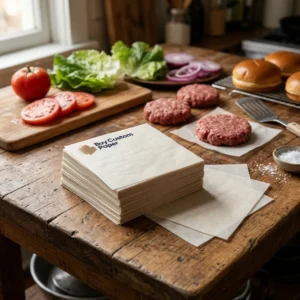
These are example finished sizes we cut, not a closed list. We also cut to your own measurements.
Cut sheet sizes (finished width × length, inches)
| Sheet group | Sizes | Where it helps |
|---|---|---|
| Mid-size squares | 10 × 10; 12 × 12 | Common starting points for wraps and liners |
| Smaller squares | 6 × 6; 8 × 8 | Compact items and smaller liners |
| Larger squares | 14 × 14; 15 × 15; 16 × 16; 18 × 18 | More coverage for bigger items or deeper vessels |
| Rectangular | 6 × 8; 7 × 10; 10 × 12; 12 × 16.5 | Items or containers longer in one direction |
| Custom | Your own width × length, or a custom-cut liner shape | Cut to your measured food or vessel |
To size a wrap, measure the food’s width and height and allow for the overlap that closes the fold. To size a liner, measure the basket or tray base and sides and decide how much overhang you want. A plain mock sheet folded around a real sandwich, or set in a real basket, tells you more than a calculation. Larger sheets add coverage and folded bulk, and fold placement decides how much of your logo stays visible.
Rolls and Dispensing Formats
Roll and dispensing options
| Format | What we offer | What to keep in mind |
|---|---|---|
| Continuous rolls | Web width and cut length to suit the task, including custom sizes | Your team cuts each length, which suits items of varying size |
| Wax-treated rolls | Weights across 25–40 GSM; widths such as 12, 15 or 18 inches | Applies to this wax-roll construction only; other grades are under Paper Weight and GSM Options |
| Perforated rolls | Tear-off format | Give us the segment length if known; spacing must suit the grade and your workflow |
| Interfolded or interleaved sheets | Sheet size plus pack configuration | Name the dispenser or pack the sheets must feed |
| Roll fit | Standard or custom core, roll length, outside diameter and winding to fit your dispenser | Send your equipment details so the roll fits; we do not assume a core size |
We create these formats through sheeting, slitting, rewinding, perforating, interfolding and custom die cutting, choosing the operation that produces the supply format you need.
Printing, Paper Color and Artwork
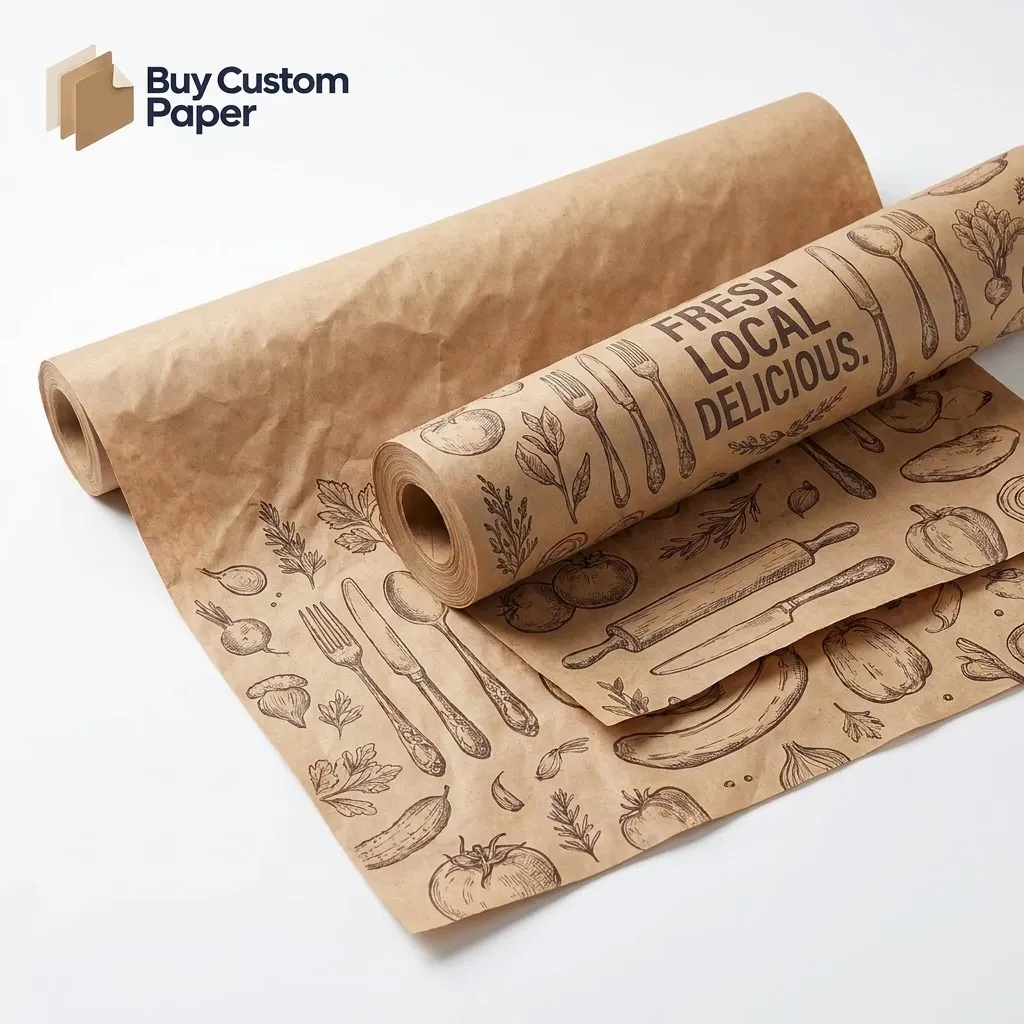
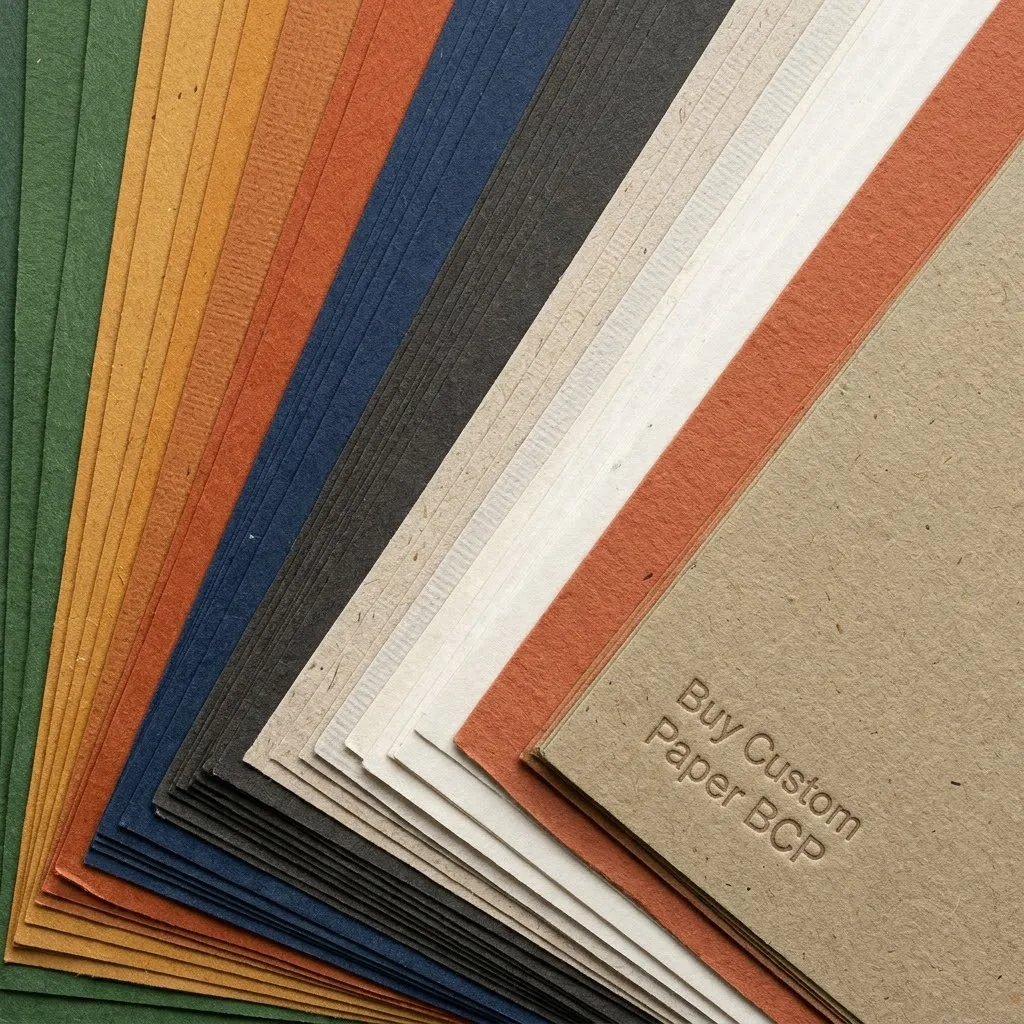
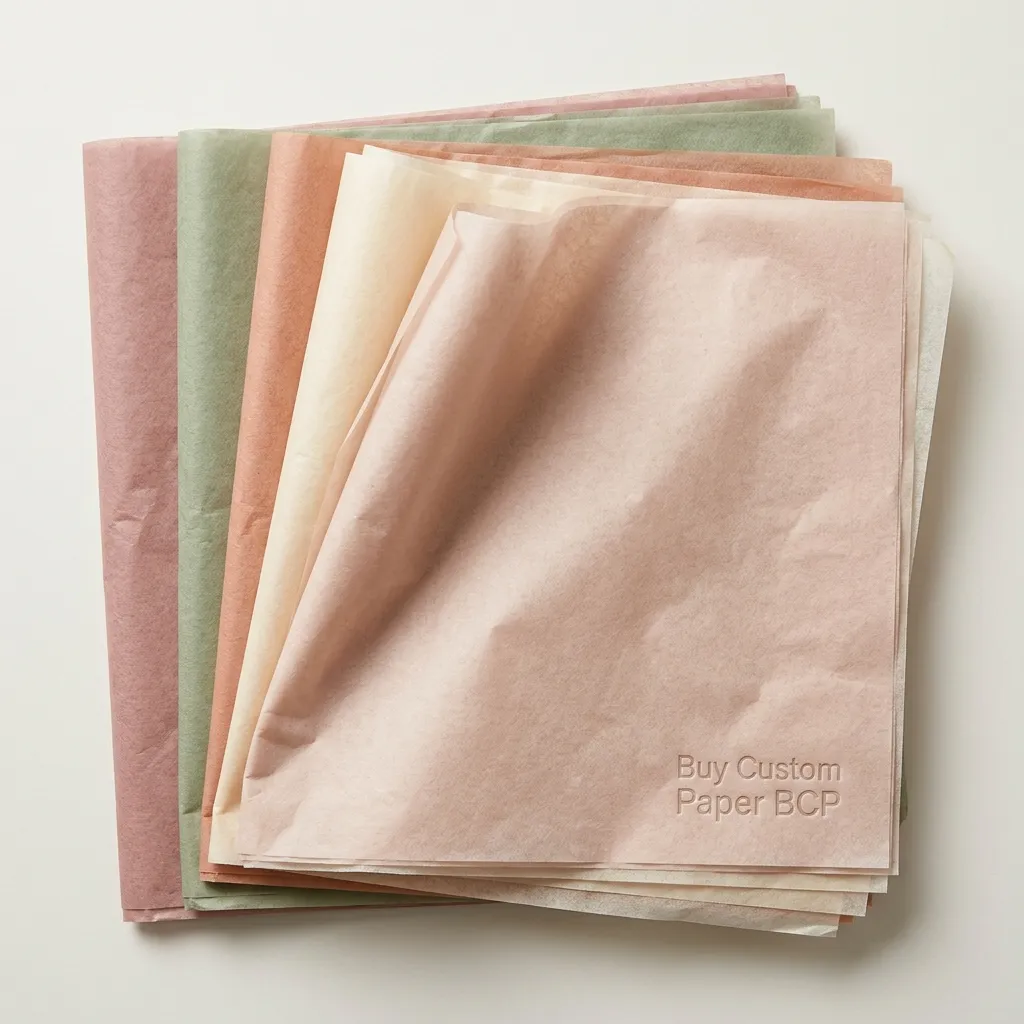
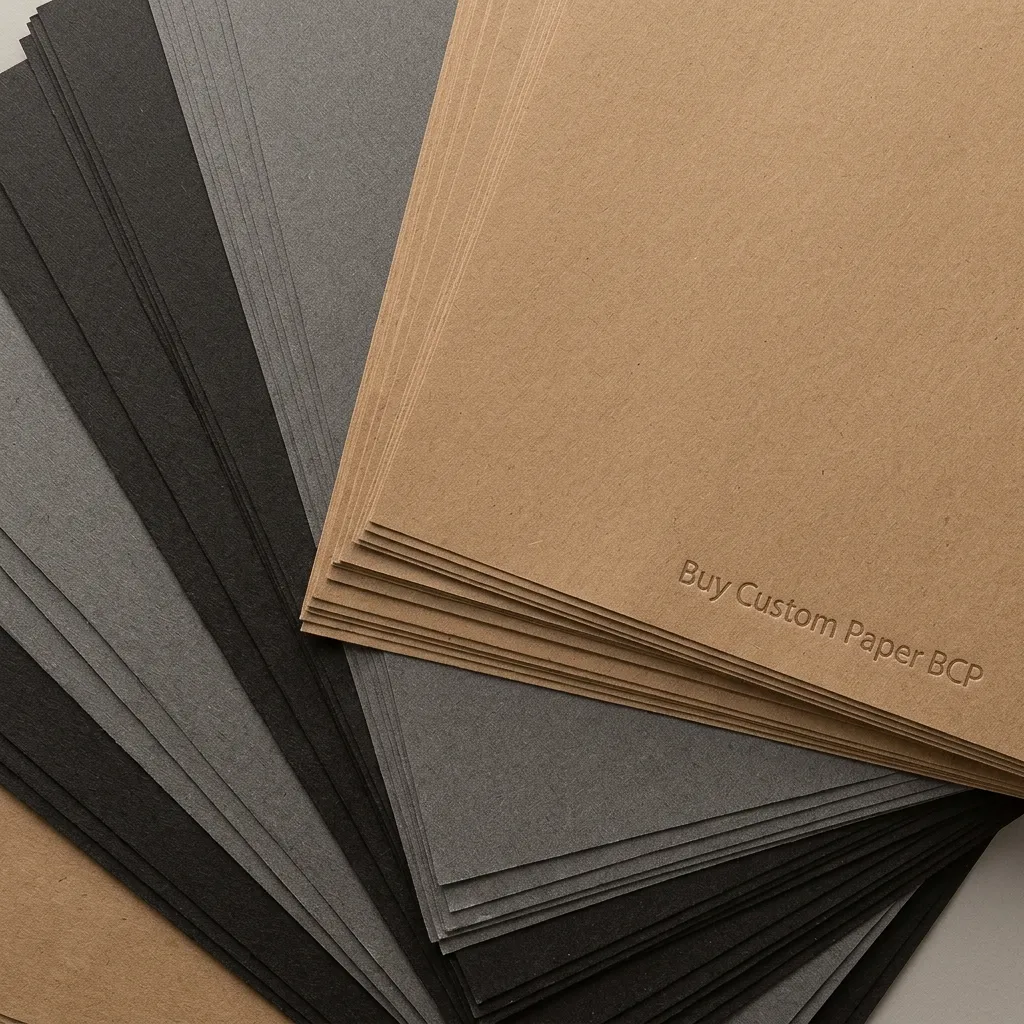
Printing involves separate choices, and stock color comes first because it changes how every ink appears. White gives printed colors a bright background, while natural brown gives a darker, warmer one, so light inks lose contrast on brown. If you need a different stock shade, ask us.
Printing and artwork options
| Decision | Options we offer | What it means for your design |
|---|---|---|
| Stock color | White or natural brown | Sets the contrast for every ink |
| Process | Flexographic, offset or digital | How ink reaches the paper |
| Colors | Plain, or 1, 2, 3 or 4 colors, including white ink | The number of inks, separate from the color system |
| Color system | Full-color CMYK, or spot/Pantone color references | Tonal imagery versus matching named brand colors |
| Print sides | One side or both sides | Decide which side faces the food |
| Layout | Single logo or image, repeat pattern or promotional artwork | Cutting and folding decide what shows |
| Coverage | Light logo or repeat, up to high-coverage or edge-to-edge artwork | Worth raising early |
| Artwork files | AI, EPS or PDF preferred; CMYK; raster images at least 300 DPI at final print size | Vector files have no DPI requirement |
| Proofing | Digital approval of artwork, size and layout before production | Confirms the visual only |
Print Processes, Colors and Sides
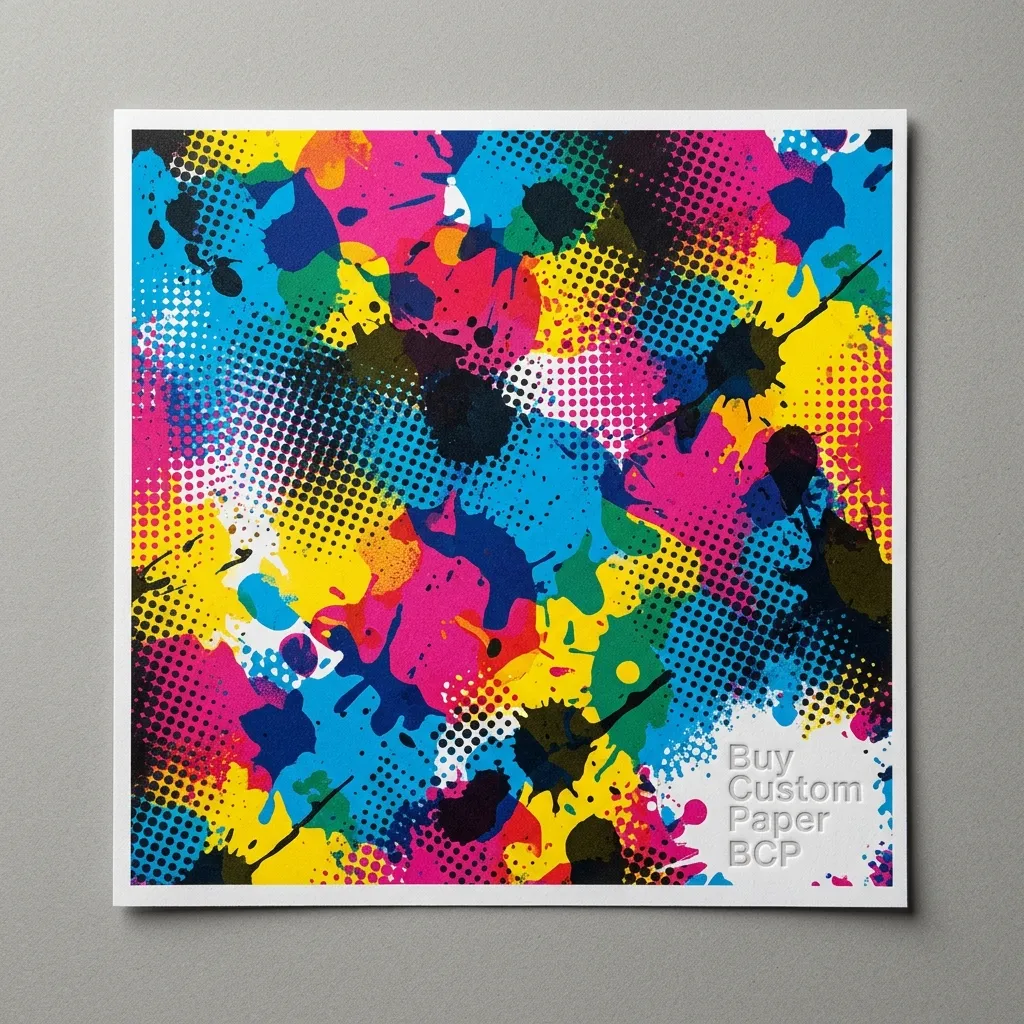
Process, color count and color system answer different questions, so specify each. Flexographic printing is the usual choice for rolls and longer runs, digital suits shorter runs and varied artwork, and offset suits fine detail. CMYK builds images from four process inks, so it suits photographs and tonal artwork. Spot or Pantone references suit brand colors you want to match by name. CMYK is not four matched spot colors, so say which one your artwork needs. One-sided printing leaves the other face plain. Give us your colors by reference so we can work from them.
Logo Layout, Ink Coverage and Proofing
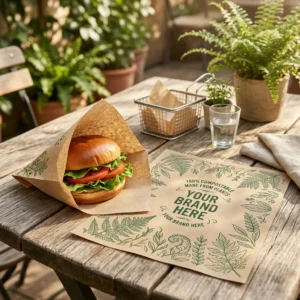
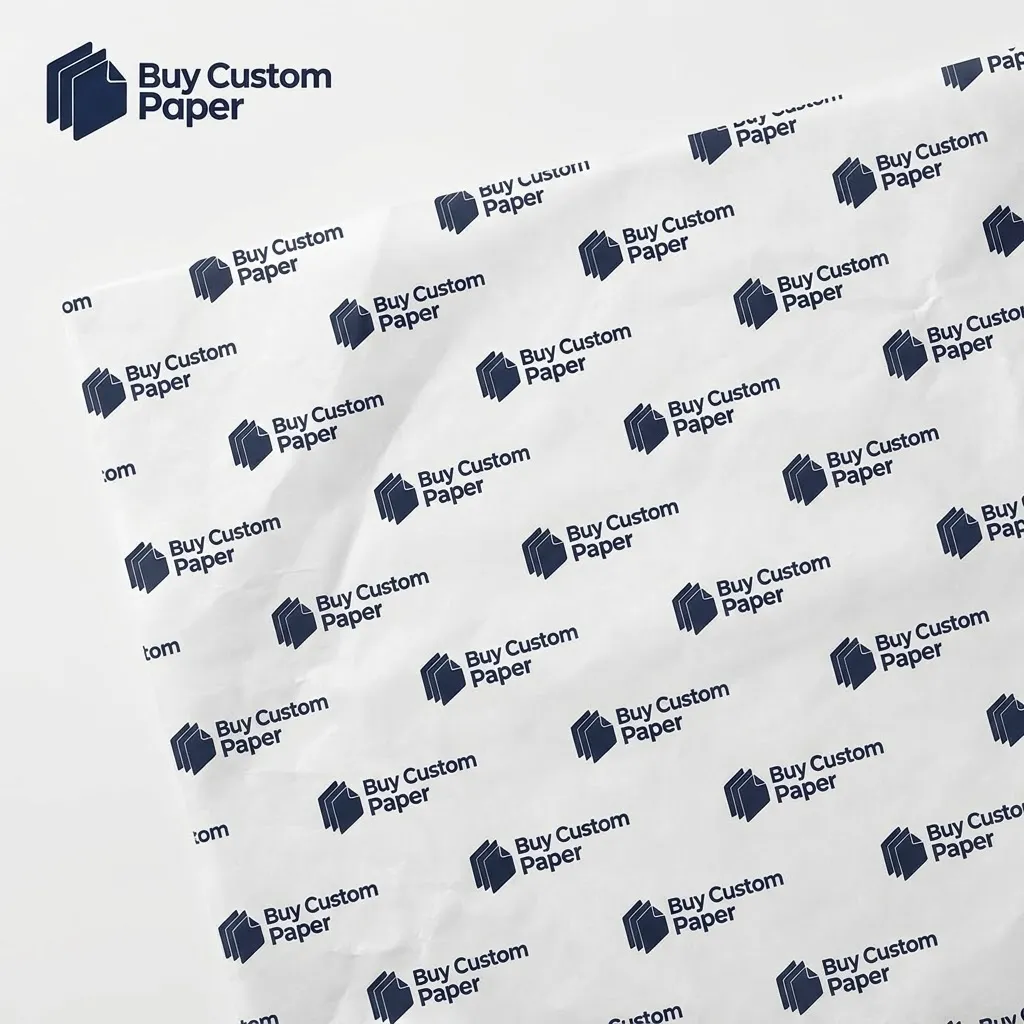
A single logo can land across a fold, while a repeat pattern keeps your brand visible wherever the sheet falls, so state the repeat direction and the area of the finished wrap you want visible. Heavy or edge-to-edge coverage can affect drying and transfer in stacked sheets or wound rolls, so mention it early.
Before production, you approve a digital proof of the artwork, size and layout. That confirms the design appears as intended; it does not test how the paper performs with heat, grease or food, which depends on the construction and its documentation. Send your artwork files, brand color references, print side and repeat direction, or discuss your food paper specifications with us.
Food Wrapping and Lining Applications
The same configurable paper serves different jobs, and each job weights the choices above differently.
Sandwich and Deli Wrapping
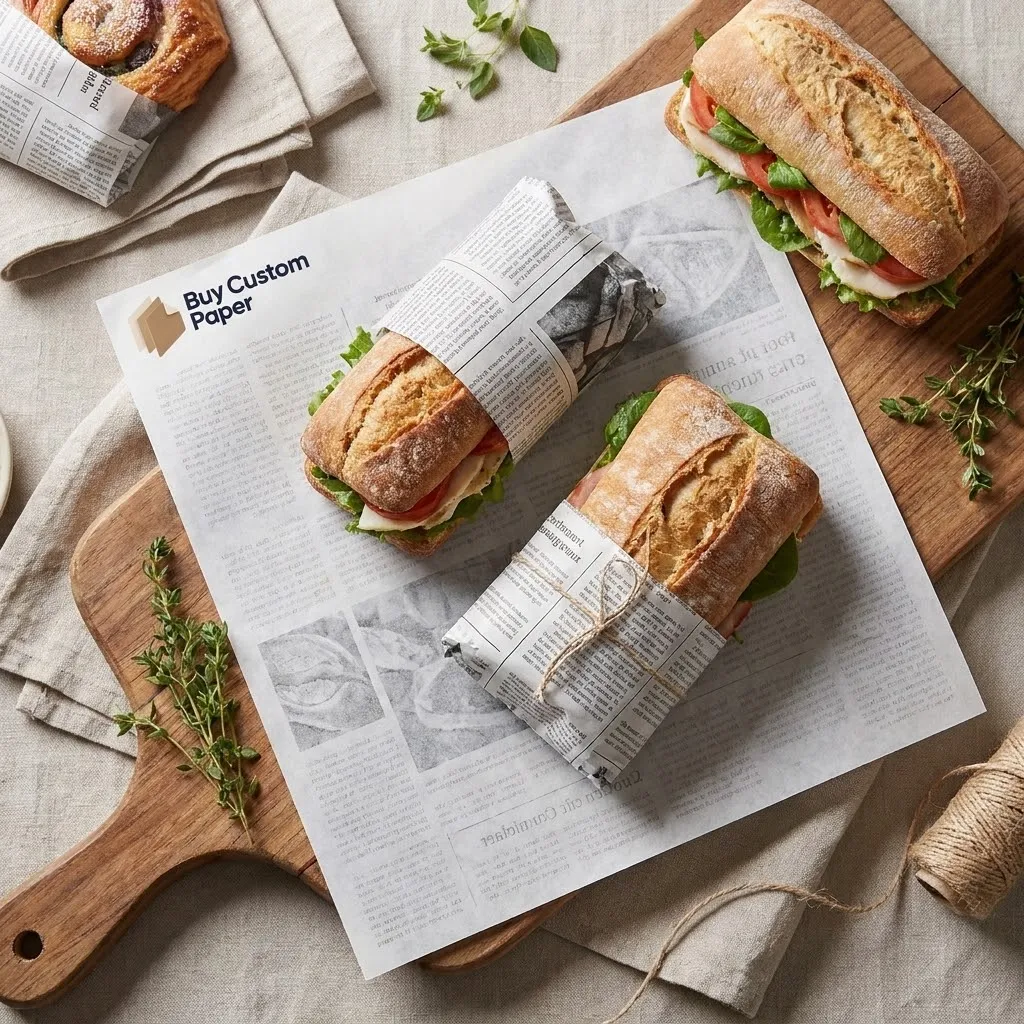
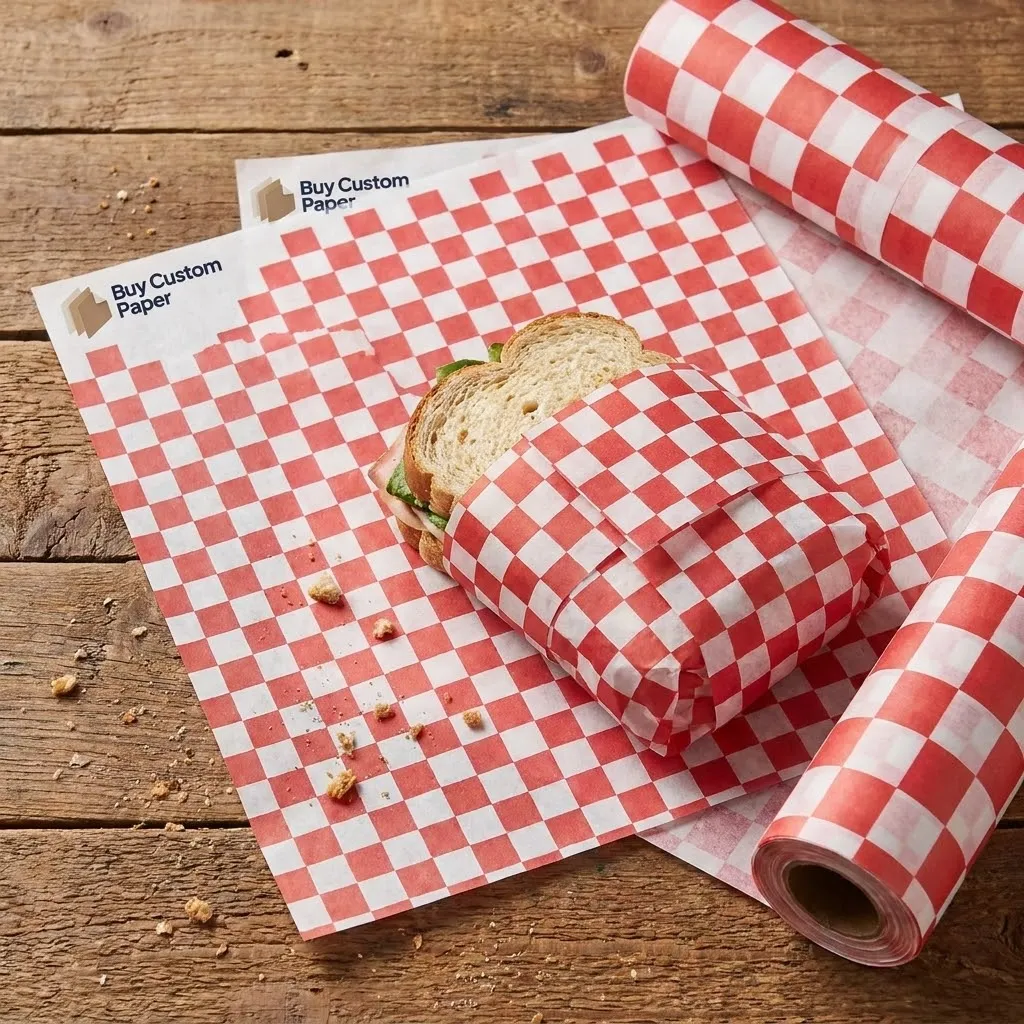
A sandwich’s height and filling set the sheet size more than its footprint does. A tall, loaded sandwich needs more width to close the fold than a flat one, but extra sheet also means more folded bulk. For cold counter service, compare a 38 GSM wrapping grade and a 12 × 12 inch sheet with a one-color logo repeat against your real sandwiches before you commit. Wet fillings send you back to the construction question, and the logo only works if it stays visible after your fold. Our custom sandwich paper page goes deeper on sandwich-specific selection.
Burgers and Greasy Takeout Foods
Burgers add fat, steam and a holding period, so treat these as separate fields when you brief us: how much grease the food releases, how much condensation builds inside the wrap, the starting temperature and how long it stays wrapped. Those facts steer the choice between greaseproof, wax-treated and coated constructions far more than weight does. To compare sizes, try a 10 × 10 or 12 × 12 inch sheet against your bun and your folds, and decide whether the paper wraps the burger or lines the container around it. Serving warm food is not the same as reheating it in the paper. See our custom burger wrapping paper for burger-specific detail.
Basket and Tray Liners
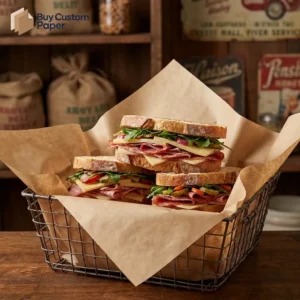
A liner is sized to the vessel, not the food. Measure the basket or tray base, the height of its sides and how far you want the paper to overhang. Then specify a custom-cut sheet from those figures, using sizes such as 10 × 10, 12 × 12 or 12 × 16.5 inches as starting points. Fried or greasy items call for a suitable grease-resistant construction. Raise broad branding early, because the visible area is the base and overhang rather than a folded wrap. A liner protects the container surface, but it does not make the container liquid-tight.
Bakery and Café Service
Finished pastries vary in shape and surface. A dry shortbread and a glazed or buttery pastry ask different things of the paper, so choose the construction for the fat the pastry leaves behind. Rolls let staff cut a length for each item when shapes vary, while sheets suit a repeated footprint. White or natural brown stock changes how a simple repeat reads. This is serving paper for finished food, not baking parchment. Release and oven papers are separate constructions with their own specifications.
How to Specify Your Food Paper
A clear brief makes the quote accurate. You do not need every answer to start, so mark unknowns as undecided.
- Food and exposure: What you wrap or line, how much grease or moisture it releases, serving temperature and time wrapped.
- Wrap or liner: Full wrap, half wrap, basket liner or tray liner.
- Size and format: Finished width × length for sheets; width, length, core and equipment for rolls; any perforation or interfold needs.
- Construction and weight: Greaseproof, wax-treated or another construction, plus a GSM or reference grade if you have one.
- Print: Stock color, process preference, color count and references, sides, repeat direction, coverage and artwork files.
- Quantity: How many sheets or rolls, and any count or size tolerance you require.
- Delivery details: Destination ZIP, number of locations and your needed-by date.
- Documentation: Any food-contact or other documents you need to see.
If you already use a paper you like, give us its specification and artwork version and we will work from that. To compare product families first, browse our food packaging paper options.
Order Custom Food Paper
- Low minimum order quantity: 500 sheets or rolls across our paper products.
- Delivery timeframe: 8–13 business days after artwork and specification approval.
- Pricing: We offer competitive pricing, and your quote reflects size, construction, colors, coverage, converting and quantity.
Because the delivery timeframe starts at approval, send your artwork and specification details early. Include how many sheets or rolls you plan to order and your needed-by date so your quote records the order-specific terms. Request a Custom Food Paper Quote and tell us about your wrap or liner.
Request a quote