
What Is Custom Sandwich Paper?
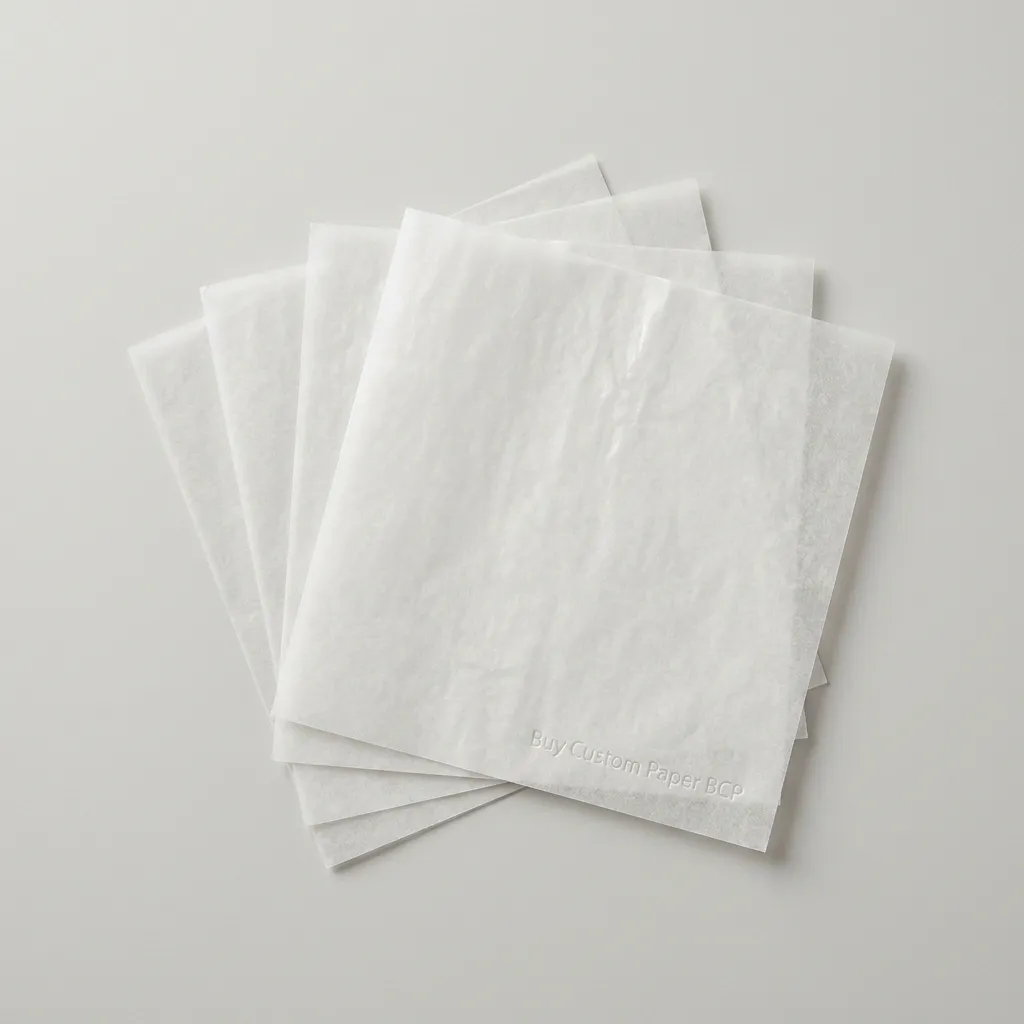
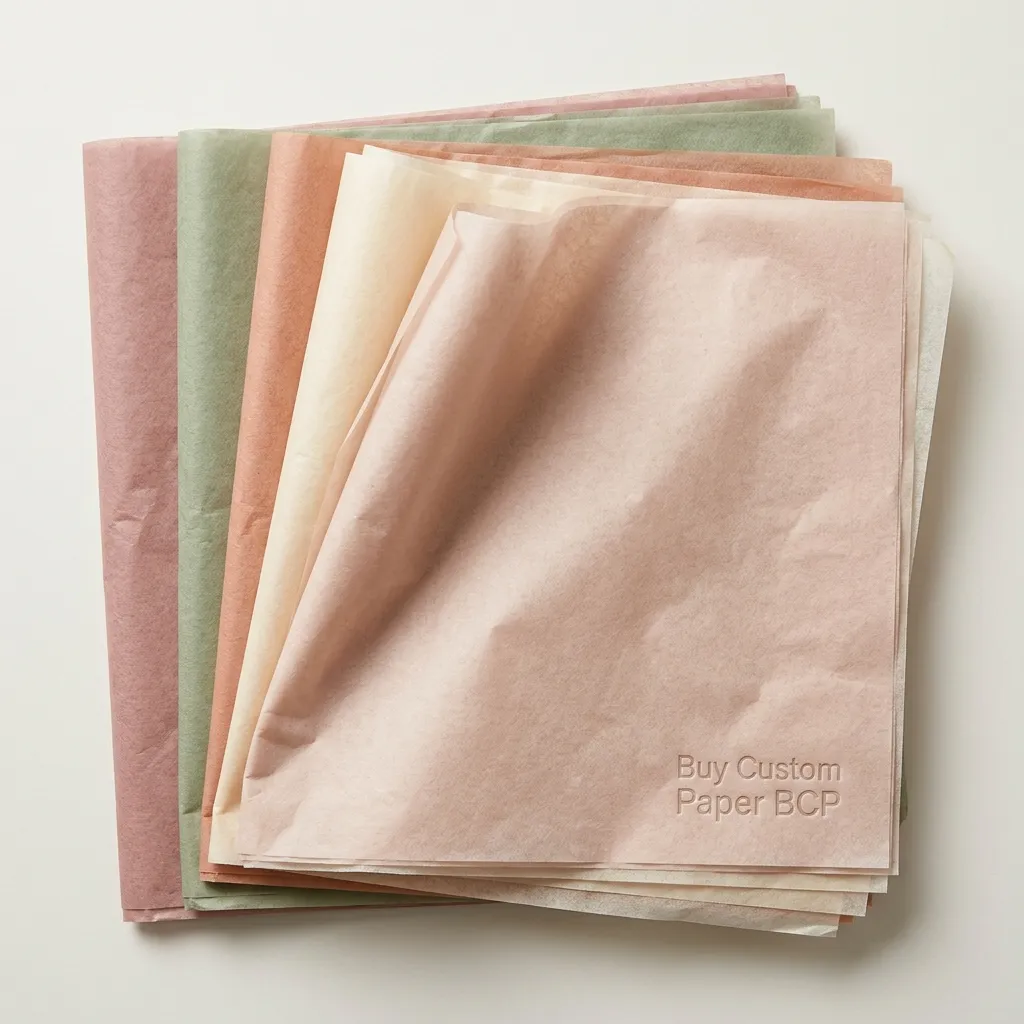
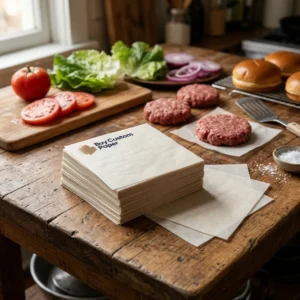
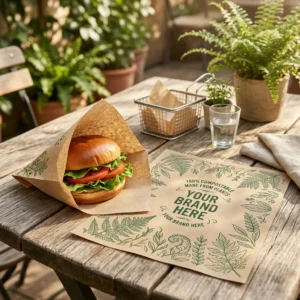
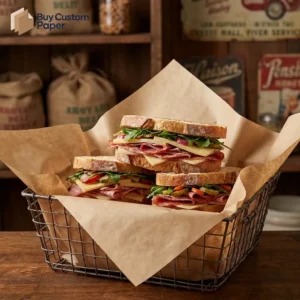
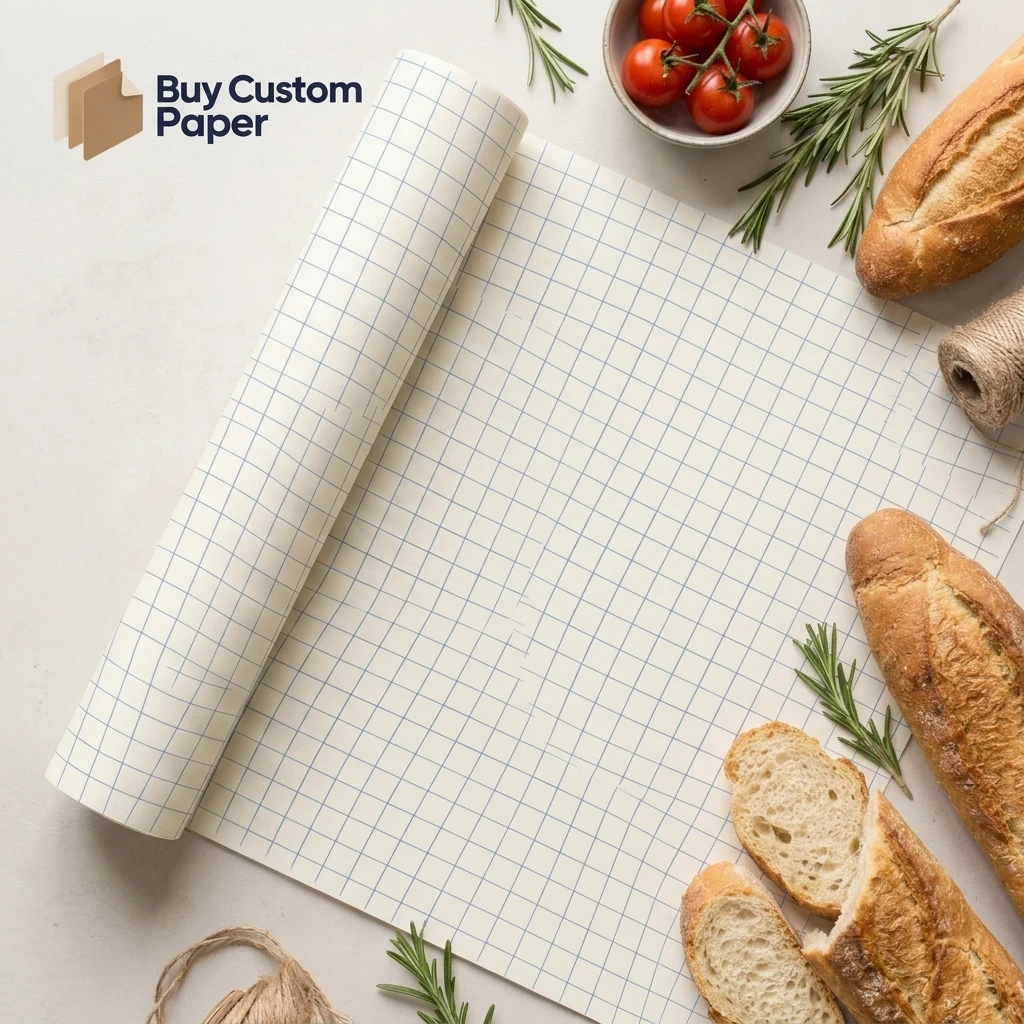
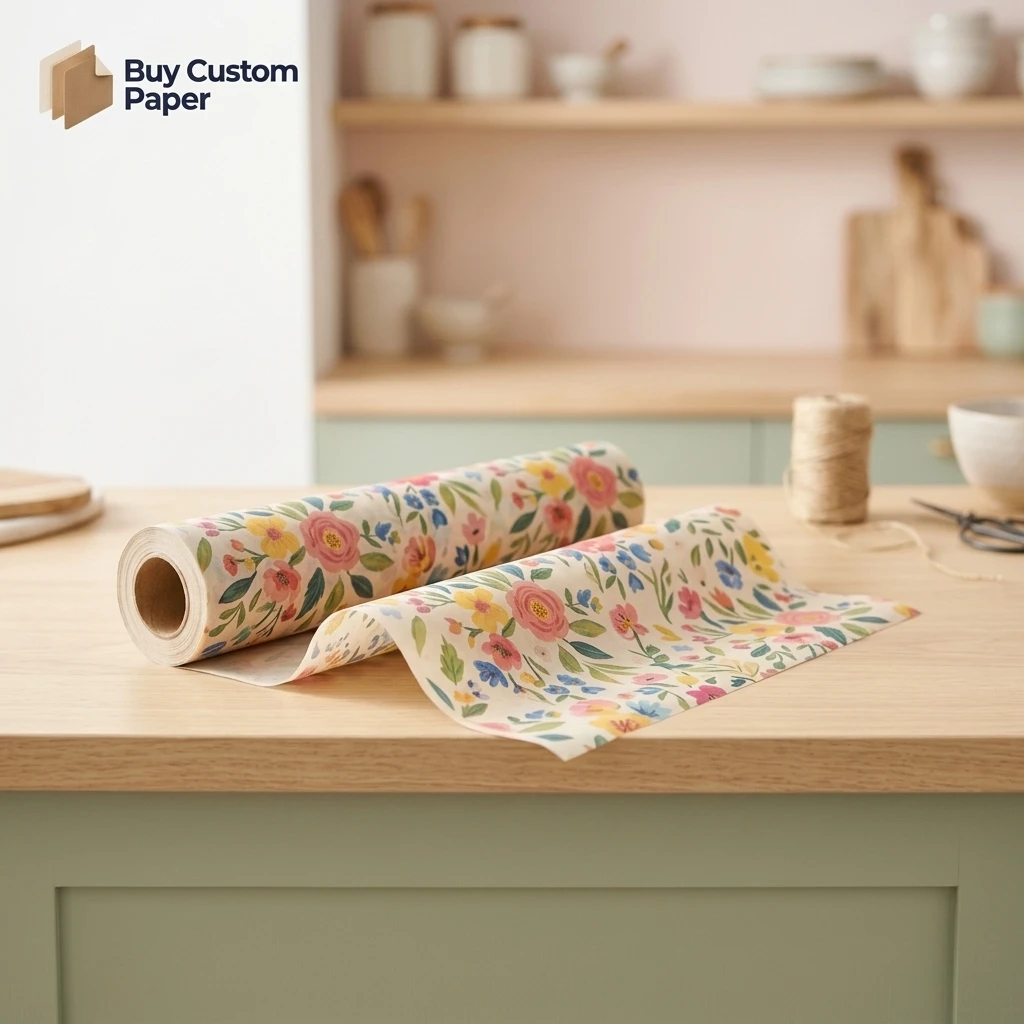
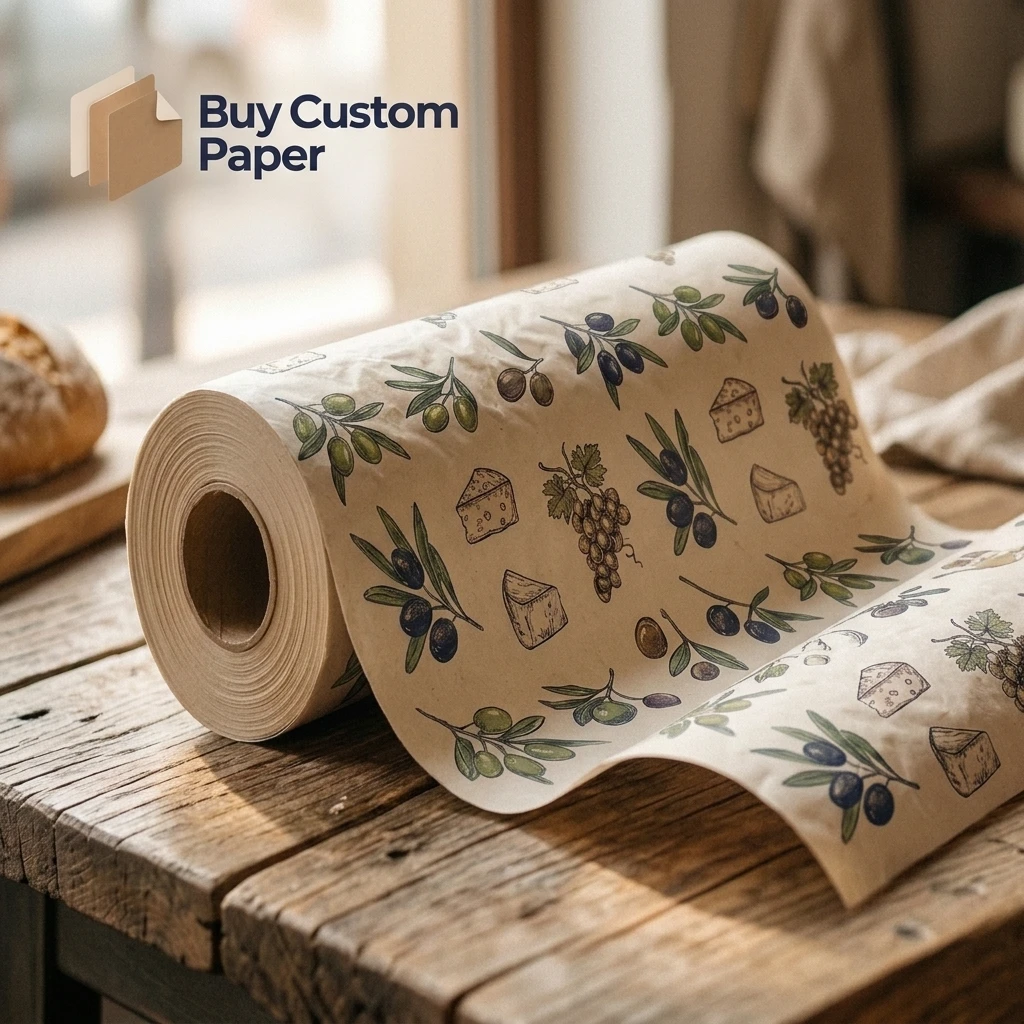
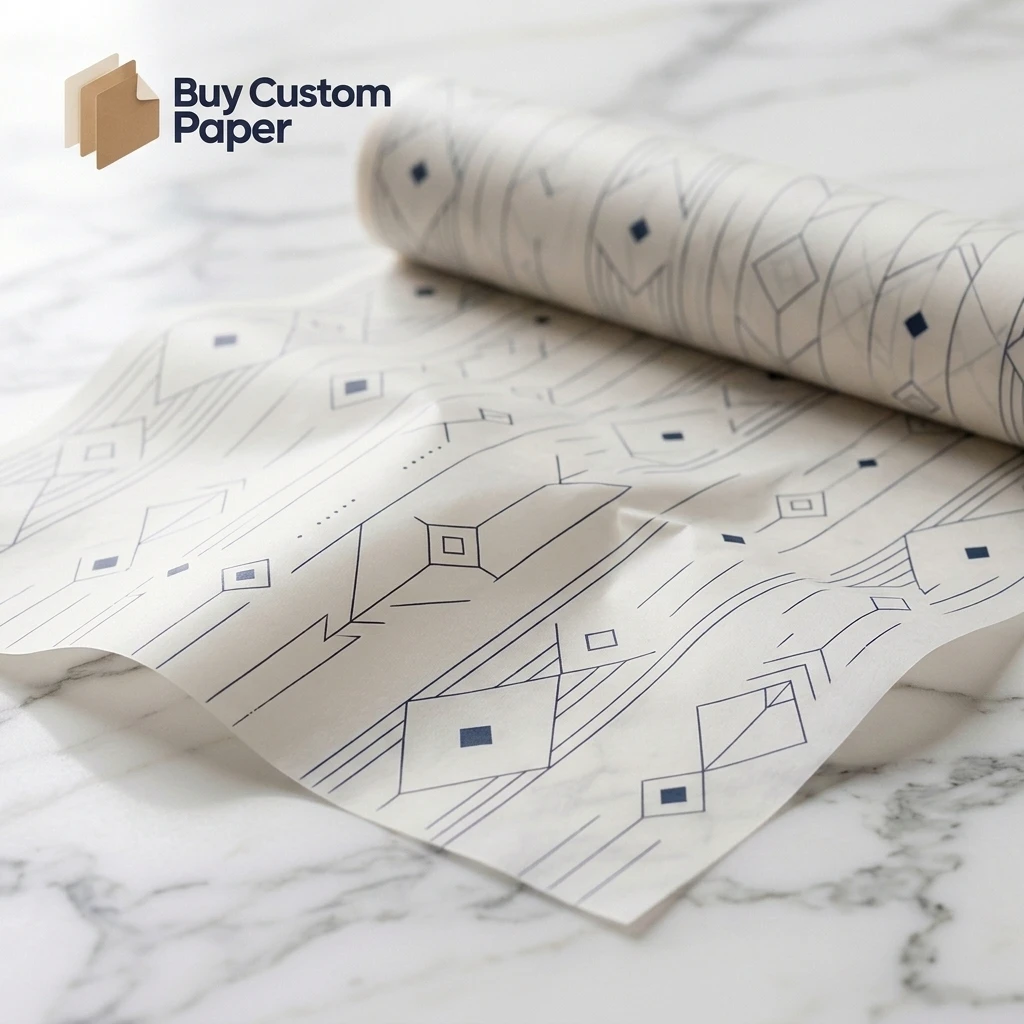
Custom sandwich paper is paper converted into sheets or rolls for wrapping sandwiches, lining food baskets and trays, separating food items, and presenting takeaway orders. It can be printed with a logo, a repeating pattern, or a promotional message.
It isn’t a single standardized product: a sheet chosen for a dry, cold sandwich isn’t automatically right for an oily burger or a warm panini. Paper weight, material construction, and coatings all affect how a sheet performs, so sandwich paper should be selected for the actual food and handling conditions rather than assumed to be interchangeable across every use.
Common Uses and Practical Benefits
- Food Presentation: Gives wrapped food or basket liners a clean, consistent look at the counter or table.
- Brand Visibility: Carries a printed logo or repeating design on every order.
- Practical Handling: Suitable sheet dimensions and formats support everyday wrapping and lining workflows.
- Grease Management: A suitable grade may help limit grease penetration under the conditions it’s designed for.
These are potential benefits of a correctly matched paper, not guarantees of every grade or construction.
Ready to specify your sandwich paper? Request a Custom Quote.
Custom Sandwich Paper Specifications and Options
Paper weight, sheet size, material, printing, and converting are separate choices, not a single bundled spec. BCP offers every GSM and every size, so the tables below show the typical ranges buyers choose from; any weight or dimension outside them can be requested and is confirmed in your quote.
GSM and Paper Weight
GSM (grams per square meter) measures paper mass per unit area. It is not a direct measurement of thickness, and it does not by itself determine grease resistance, wet strength, tear resistance, or heat tolerance. Those properties also depend on fiber composition, coatings, and the finished construction. Choose weight based on how the paper will actually be handled and what it needs to resist, not GSM alone.
| GSM range | Typical use | Availability |
| 18–25 gsm | Light-duty wrapping and basket liners | Available |
| 30–35 gsm | General wrapping where a lighter hand-feel is preferred | Available |
| 38–40 gsm | A frequently used baseline for everyday sandwich wrapping | Available |
| 35–50 gsm | General-purpose deli wrapping and lining | Available |
| 50–60 gsm | Applications needing more substantial handling; performance still depends on construction | Available |
| Custom weight | Any GSM to suit your product | Available on request |
Sheet Sizes and Custom Dimensions
Sheet size should give the sandwich or serving surface enough coverage to wrap or line with adequate overlap. Any size can be produced; the sizes below are the ones most commonly ordered.
| Sheet size | Typical use | Availability |
| 6 × 6 in | Small or compact portions | Available |
| 6 × 8 in | Smaller sandwiches | Available |
| 7 × 10 in | Small sandwiches or wraps | Available |
| 8 × 8 in | Compact basket liners | Available |
| 10 × 10 in | Smaller sandwiches and standard liners | Available |
| 10 × 12 in | Larger wraps and sandwiches | Available |
| 12 × 12 in | Common reference size for sandwich wrapping | Available |
| 12 × 16.5 in | Larger wrapping and lining | Available |
| 14 × 14 in | Larger subs, wraps, and generous coverage | Available |
| Custom dimensions | Products outside standard formats | Customer-specified |
Sheets and Rolls
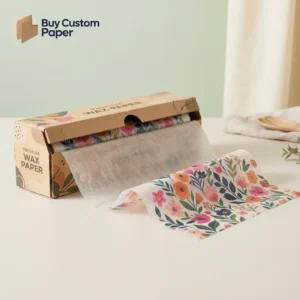
BCP supplies sandwich paper as pre-cut sheets and as rolls. Pre-cut sheets suit manual wrapping, basket lining, and portion-controlled service stations. Rolls let an operation dispense and cut paper at the workstation instead of handling individual sheets, and perforation can make tear-off portions more consistent. Interleaving, which separates individual sheets, can also assist handling and dispensing.
| Roll specification | Typical range |
| Roll width | 6–24 in (150–600 mm) |
| Roll length | 200–1,000 ft (60–300 m) |
| Core diameter | 1 in, 1.5 in, or 3 in (25, 38, or 76 mm) |
Custom roll widths, lengths, and core sizes can be requested. Final specifications are confirmed in your quote.
| Format | Typical workflow | Confirm at quote |
| Pre-cut sheets | Manual wrapping, basket lining, portion control | Sheet size, count per pack |
| Rolls | Workstation dispensing and cutting | Width, length, core diameter |
| Perforated rolls | Controlled tear-off portions | Perforation pitch, roll details |
| Custom-cut liners | Nonstandard trays or baskets | Length, width, shape |
| Interleaved sheets | Easier handling and dispensing | Sheet size, interleaving arrangement |
Paper Materials, Wax, and Coatings
Base paper, coatings, and treatments are separate layers of the same product, and they affect performance differently. An uncoated paper’s properties come mainly from its fiber structure and grade; a grease-resistant grade is engineered to limit oil penetration; a wax treatment can add moisture resistance and release characteristics, with suitability depending on the exact wax and construction; and polymer or silicone treatments add barrier or release properties that can also affect recyclability. Parchment paper is a related but distinct category, built for release and certain heat-related uses, and it should not be treated as a direct substitute for sandwich wrapping paper.
| Material or construction | Relevant characteristic | Consideration |
| Uncoated paper | Base-paper properties | Suited to dry or lightly exposed fillings; performance depends on grade |
| Grease-resistant grade | Resists oil penetration | Best matched to fatty fillings and expected contact time |
| Wax-treated paper | Moisture resistance, release | Suitability depends on wax type and construction |
| Polymer-coated paper | Added barrier properties | May affect recyclability |
| Silicone-treated paper | Release/non-stick properties | Relevant only where a release function is needed |
| Parchment paper | Distinct treated-paper category | Not a direct substitute for sandwich wrap |
These are not interchangeable: the right construction depends on the food and the conditions it will meet.
Printing and Branding Options
Artwork can be reproduced as a logo, a repeating pattern, or a promotional message, in one color or multiple colors, printed on one or both sides depending on the design. BCP offers flexographic, digital, and offset printing, so the process can be matched to your run length and artwork complexity. White paper gives a bright, neutral background for color artwork; a natural-brown appearance supports a kraft-style look. Every order goes through a proof for review and approval before production, which is the point to confirm exact color matching and placement.
| Option group | Choices | What it determines |
| Printing method | Flexographic, digital, or offset | Matches run length and artwork complexity |
| Color configuration | One color, multicolor, or full CMYK | Visual complexity of the design |
| Print placement | One-sided or two-sided | Which surfaces carry the branding |
| Design approach | Logo, repeating pattern, or promotional message | Brand presentation |
| Base appearance | White or natural-brown | Print contrast and overall look |
| Artwork process | File submission, proof review, approval | Reduces avoidable production errors |
Cutting and Finishing Options
Most sandwich-paper orders need only standard sheet cutting to the specified dimensions. Roll orders add slitting and rewinding to produce the finished roll, and perforation supports repeatable tear-off where a roll format calls for it. Die cutting and lamination are specialty processes relevant only to shaped liners or specific barrier requirements; they aren’t needed for ordinary rectangular wrapping sheets.
| Process | Purpose | Relevance |
| Sheet cutting | Produces flat sheets at specified dimensions | Core option for most orders |
| Slitting | Produces narrower rolls from a wider parent roll | Roll-format orders |
| Rewinding | Produces the finished roll configuration | Roll-format orders |
| Perforation | Enables repeatable tear-off | Selected roll formats |
| Die cutting | Produces shaped liners | Specialty applications only |
| Interleaving | Separates sheets for handling | Dispensing-focused orders |
| Coating/waxing | Adds functional treatment | Selected constructions |
| Lamination | Joins layers for barrier needs | Specialty constructions, not a default |
Functional Properties and Performance
Grease resistance, moisture resistance, release behavior, wet strength, and heat or cold suitability are each distinct properties, and none of them should be assumed from GSM or from another property alone. A grade’s grease resistance doesn’t establish its heat tolerance, and a paper’s weight doesn’t establish its wet strength. Confirm the property that actually matters for your application rather than relying on general descriptors.
| Property | What it indicates | Depends on |
| Grease resistance | Resistance to oil penetration | Paper grade and construction |
| Moisture resistance | Resistance to moisture penetration | Construction and any coating |
| Release | Tendency not to stick to food or surfaces | The specific treatment applied |
| Wet strength | Mechanical integrity when damp | The grade’s construction, not GSM alone |
| Breathability | Moisture-vapor transmission | The construction and intended use |
| Heat suitability | Performance at a given temperature and duration | The specific construction |
| Cold suitability | Performance in cold storage and handling | The specific construction |
| Sealability | Ability to form a seal | A compatible coating and process |
Avoid relying on blanket claims such as “100% greaseproof,” “leakproof,” “microwave-safe,” or “oven-safe.” Ask about the specific construction’s tested performance for your intended use.
Not sure which grade or size fits your menu? Discuss Your Paper Specifications.
Applications of Custom Sandwich Paper
Sandwich Shops and Delis
Sandwich shops and delis use this paper to wrap made-to-order sandwiches, subs, and club sandwiches, and to line service trays during busy counter service. Sheet dimensions should fit the sandwich with enough overlap for a clean wrap, and the paper construction should match the filling’s moisture and grease rather than being chosen on appearance alone. A printed logo adds brand presence to every order that leaves the counter. Suitability still depends on the specific filling, temperature, and how long the food sits wrapped before it’s eaten.
Burger Restaurants and Fast-Casual Dining
Burgers, loaded sandwiches, and basket-lined meals put more oil and moisture against the paper than a typical deli order, so wet strength and grease resistance often carry more weight in the material decision. A practical sheet size and clear print design help fast-casual counters keep service quick without compromising on branding. The right grade for this use should be confirmed against the actual sauces, cheese, and fat content involved, since performance varies by construction and isn’t guaranteed across every grade.
Cafés and Panini Counters
Cafés use sandwich paper for panini, toasted sandwiches, and breakfast sandwiches, where dimensions need to suit the shape of a pressed or grilled item and handling needs to hold up to moisture and grease from the filling. Warm food changes the demands on the paper compared with a cold sandwich, so the construction should be checked against the expected temperature and contact time. Oven, grill, or microwave suitability should never be assumed from general sandwich-paper marketing; confirm it for the specific product before relying on it.
Food Trucks and Takeaway Businesses
Food trucks and takeaway counters need paper that wraps quickly and holds up during handheld, on-the-move eating, so practical sheet sizes and a dispensing-friendly format such as rolls matter for service speed. Printed branding on a 500-piece minimum order lets a newer or smaller operator test packaging and menu changes without committing to a large production run. Before ordering, compare the MOQ against your expected daily usage, storage space, and delivery timeline.
Bakeries and Breakfast Service
Bakeries use sandwich paper for breakfast sandwiches, filled rolls, and bagel sandwiches, where eggs, cheese, butter, and sauces introduce grease and moisture that the paper needs to handle. Sheet dimensions should match the product, and printed sheets help keep takeaway presentation consistent across a busy breakfast rush. As with other warm applications, confirm the construction’s suitability for the actual temperature and contact time rather than assuming general-purpose sandwich paper will perform the same way.
Catering and Corporate Food Service
Catering and corporate food service use sandwich paper to wrap individual portions for events, meetings, and boxed lunches, where consistent sheet dimensions help standardize portions across a large order. Printed branding can carry an event or catering identity across every wrapped item. Because these orders tend to repeat, buyers ordering sandwich paper wholesale should plan around clear carton quantities, confirmed packing configuration, and delivery timing suited to the event date.
Find the Right Paper for Your Application: share your use case and we’ll help you specify it.
How to Choose the Right Sandwich Paper
If you don’t yet know the exact specification you need, work through the food, the fit, the material, and the branding in that order rather than starting from a GSM number. A dry sandwich, an oily burger, and a warm panini each call for a different combination of weight, construction, and format, and getting the fit and material right matters more than any single spec in isolation.
- Identify the Food: Note the moisture, grease, temperature, and expected contact time before anything else.
- Measure the Product: Pick dimensions that give the sandwich or serving surface enough overlap.
- Select the Material: Match the construction (uncoated, grease-resistant, wax-treated, or coated) to the performance the food actually requires.
- Plan the Artwork: Decide on logo, print colors, and one- or two-sided layout.
- Confirm the Order: Specify quantity, format, packing, and delivery needs before requesting a quote.
Match the Paper to the Food
Dry, cold, oily, and warm foods each place different demands on sandwich paper. Rather than choosing a paper because it’s labeled generically “food-grade,” identify the actual contact conditions (fat content, moisture, and temperature) and select the construction built for those conditions.
Choose the Right Size and Format
Compare pre-cut sheets against rolls based on your workstation setup: sheets suit manual wrapping and basket lining, while rolls suit dispensing at a fixed station. Dimensions should give enough overlap for the sandwich or enough coverage for the tray, and a dispenser’s width should match the roll format you order.
Select Printing and Branding
Artwork complexity, base-paper color, and the number of print colors all affect how a design reads on the finished sheet, and one- versus two-sided printing depends on which surfaces need branding. Every order includes a proof for review, which is the stage to confirm placement and color.
Custom Sandwich Paper MOQ, Delivery, and Ordering
Minimum Order Quantity and Delivery
MOQ: 500 minimum quantity, whether you order paper, sheets, pieces, or rolls.
Delivery: 8–13 business days from final artwork and proof approval, covering production and dispatch. Transit time depends on your delivery location, and your quote will confirm the timeline for your specification.
What affects your price:
- Paper Grade: Heavier or coated grades typically cost more per sheet than lighter, uncoated stock.
- Sheet Size: Larger sheets and custom dimensions use more material and may affect unit cost.
- Print Colors: More colors or full-coverage artwork generally cost more than a single-color design.
- Order Quantity: Larger quantities typically lower the per-unit price.
Artwork, Proofs, and Repeat Orders
Share your logo or artwork file along with your dimensions, quantity, and preferred construction when requesting a quote. Every order goes through a proof for your review and approval before production begins, which is the point to confirm placement, color, and layout. Once a specification and artwork file are approved, that version can be used as the basis for repeat orders. Confirm accepted file formats and the proof process when you submit artwork.
Requesting a Custom Quote
To get a quote, share your application (what you’re wrapping and under what conditions), dimensions, quantity, preferred paper construction, and artwork if you have it. If you’re not sure which GSM or material grade fits your use, describe the food and service conditions and the team can help narrow it down. Get a Sandwich Paper Quote to get started.
Food-Contact Suitability and Material Compliance
Buy Custom Paper offers FDA-compliant food-contact paper and rolls for sandwich wrapping and food-service applications. Suitability depends on the selected paper construction, any coatings or treatments, the inks used, and the intended conditions of use.
- FDA-compliant food-contact materials: Our food-contact sandwich paper sheets and rolls are produced to meet applicable FDA food-contact requirements.
- Construction-specific suitability: Food-contact appropriateness is tied to the exact paper, coating, and ink combination you order, so share your food type, temperature, and contact time when requesting a quote.
Request Your Custom Sandwich Paper Quote: share your application, size, and branding needs to get started.